Heating and air conditioning repair in Seattle
Our guide to heating and air conditioning repair covers how the job works. Below: the Seattle numbers a HVAC contractor looks at, with sources.
Seattle housing, by the numbers
Around half of the homes in Seattle went up in 1976 or before, according to the Census ACS. Of the 56 other cities in this network, 24 have newer housing by median year built. Age of the house is a clue to duct leaks and insulation, which change the right system size.
Source: Census ACS
Source: Census ACS
Roughly 44 in every 100 occupied homes in Seattle are owner-occupied. That is 158,945 of 363,466 households. Of the 56 other cities in this network, 15 have a lower share of owner-occupied homes. If you rent, your lease likely puts heating and cooling repairs on the owner.
Source: Census ACS
Source: Census ACS
In Seattle, about 61% of occupied homes heat with electricity, more than any other fuel. Other fuels: utility gas 33%, fuel oil or kerosene 3%, bottled or tank gas under 1%. Switching fuels is possible, but ask what it means for your panel, gas line and ducts.
Source: Census ACS
Source: Census ACS
Heating and cooling load in Seattle
NOAA's 30 year normals give Seattle roughly 211 cooling degree days annually. Measured at the Seattle Sand Pt Wsfo (WA) station. The cooling load here is higher than in 2 of the 56 other cities we cover. Cooling demand at that level is why the outdoor unit's size and condition matter here.
Source: NOAA normals
Source: NOAA normals
Homes near Seattle face about 4,482 heating degree days in a typical year, per NOAA's 1991-2020 normals. Measured at the Seattle Sand Pt Wsfo (WA) station. The heating load here is higher than in 35 of the 56 other cities we cover. That is the number a contractor's load calculation starts from when sizing heat for a house here.
Source: NOAA normals
Source: NOAA normals
Seattle logs roughly 25 freezing nights in an average year. The number of freezing days here is higher than in 14 of the 52 other cities we cover.
Source: NOAA normals
Source: NOAA normals
A normal year brings about 2 days of 90 F or hotter near Seattle (NOAA normals). Of the 54 other cities in this network, 0 have a lower number of 90 F days.
Source: NOAA normals
Source: NOAA normals
Seattle seasons, by the numbers
On heat wave risk, FEMA's National Risk Index puts King County, WA at relatively high. 30 of the 55 other cities we cover sit in counties with the same heat wave rating. Extended heat is hard on compressors that are already weak.
Source: FEMA risk index
Source: FEMA risk index
King County, WA carries a relatively low cold wave risk rating in FEMA's National Risk Index. The same cold wave rating applies in 5 of the 53 other cities in this network. A cold wave also stresses pipes and venting near the furnace, worth a look during a tune-up.
Source: FEMA risk index
Source: FEMA risk index
In Washington, HVAC contractors are licensed or registered by the Washington State Department of Labor & Industries (L&I); status can be checked on the agency's official lookup page.
Source: Washington State Department of Labor & Industries (L&I) (Washington) · Washington State Department of Labor & Industries (L&I) license information
Source: Washington State Department of Labor & Industries (L&I) (Washington) · Washington State Department of Labor & Industries (L&I) license information
Sources, checked October 2026
- U.S. Census Bureau, ACS 2024 5-year, profile 16000US5363000
- NOAA NCEI U.S. Climate Normals 1991-2020, station USW00094290
- FEMA National Risk Index (December 2025), King County, WA
- Washington State Department of Labor & Industries (L&I) (Washington)
- Washington State Department of Labor & Industries (L&I) license information
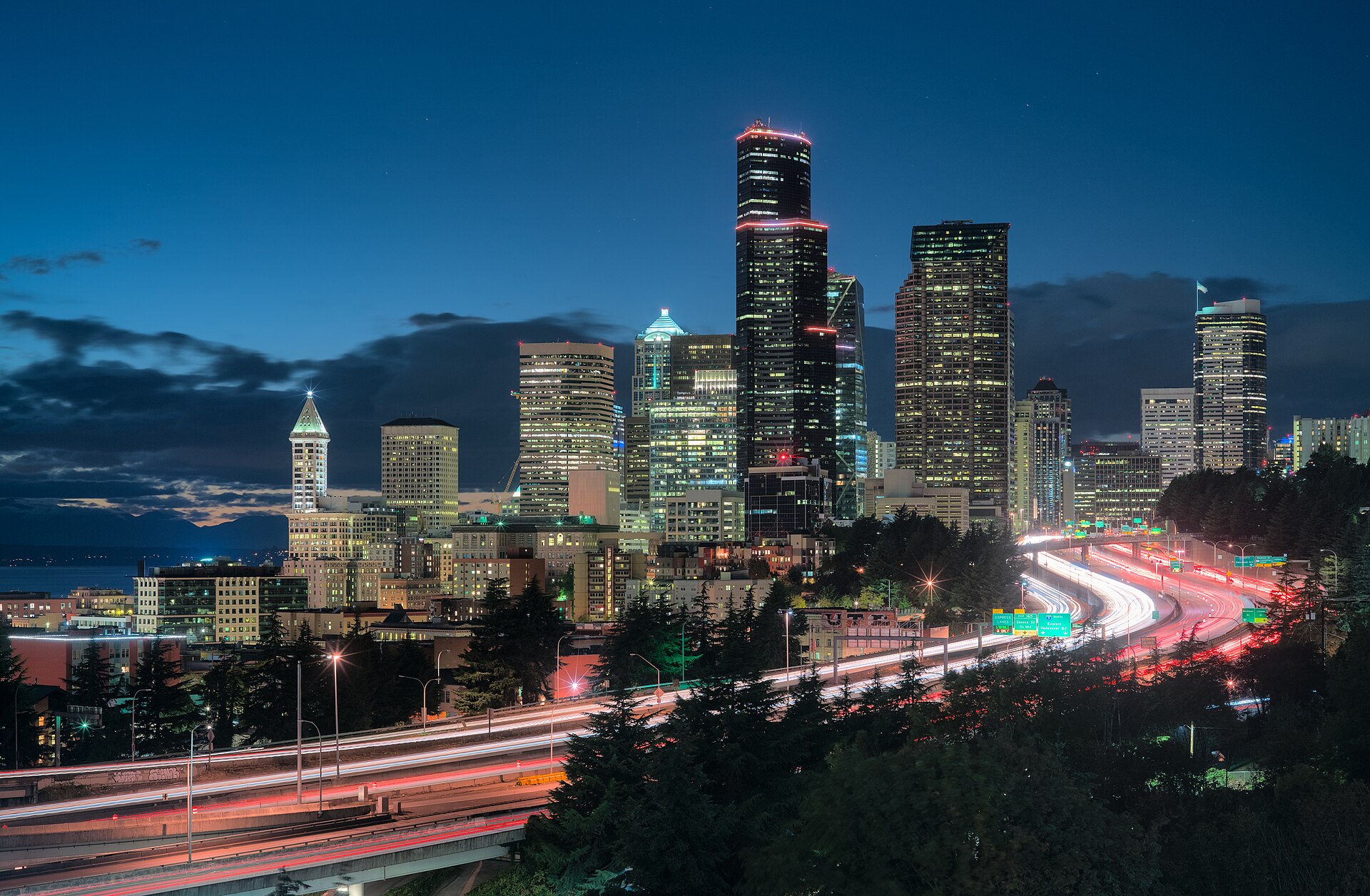
Local offices and rules in Seattle
Energy efficiency for single-family homes, duplexes and townhouses falls under the residential provisions of the 2021 Seattle Energy Code.
Source: www.seattle.gov. Checked October 2026.
Source: www.seattle.gov. Checked October 2026.
The 2021 Seattle Mechanical Code (2021 IMC with local amendments) and the 2021 International Fuel Gas Code with Seattle amendments govern HVAC and gas appliance work.
Source: www.seattle.gov. Checked October 2026.
Source: www.seattle.gov. Checked October 2026.
Anyone installing gas piping from the meter to the appliance in Seattle needs a City of Seattle gas piping mechanic license issued by SDCI trade licensing.
Source: www.seattle.gov. Checked October 2026.
Source: www.seattle.gov. Checked October 2026.
In Seattle, an SDCI mechanical permit covers installing new HVAC equipment; plumbing, gas lines and refrigeration need separate permits, and simple projects may get a subject-to-field-inspection (STFI) mechanical permit within a day.
Source: www.seattle.gov. Checked October 2026.
Source: www.seattle.gov. Checked October 2026.
Seattle City Light offers heat pump instant discounts through participating distributors, with larger discounts at higher efficiency tiers (HSPF2 8.1+, 8.5+ and 9.5+); DIY installs do not qualify.
Source: www.seattle.gov. Checked October 2026.
Source: www.seattle.gov. Checked October 2026.
Under the Seattle Clean Heat Program, homes heating with oil can get an instant rebate when converting to a qualified heat pump system using a participating contractor.
Source: www.seattle.gov. Checked October 2026.
Source: www.seattle.gov. Checked October 2026.
Seattle City Light, the city-owned not-for-profit electric utility, serves the City of Seattle and neighboring suburbs, delivering power to over 503,000 customer premises.
Source: www.seattle.gov. Checked October 2026.
Source: www.seattle.gov. Checked October 2026.
If you smell gas, leave the house and call your gas utility from outside. Keep a working carbon monoxide alarm near the bedrooms, and do not open a furnace cabinet that is running.
Common jobs